オープンウェイトとアメリカのAIリーダーシップ — NVIDIAら25社の共同声明 全文対訳
この文書について
2026年7月24日、NVIDIAが公開したPDFで、AI・半導体・クラウド・ベンチャーキャピタルの25団体が連名の政策声明を出した。オープンウェイトモデル(誰でもダウンロードして検査・改変し、自前のインフラで動かせるAIモデル)を規制で縛るのではなく、米国のAI戦略の土台に据えるべきだと主張している。
声明の骨子は3つ。
- オープンウェイトはAI経済へのアクセスを広げ、競争を強め、顧客に主導権を戻す
- オープンウェイト固有のリスクは実在するが、答えは禁止ではない。透明性はむしろ安全性の経路になりうる
- 政策当局は蒸留(distillation)のような正当な開発技法と、違法な価値の抜き取りを混同すべきではない
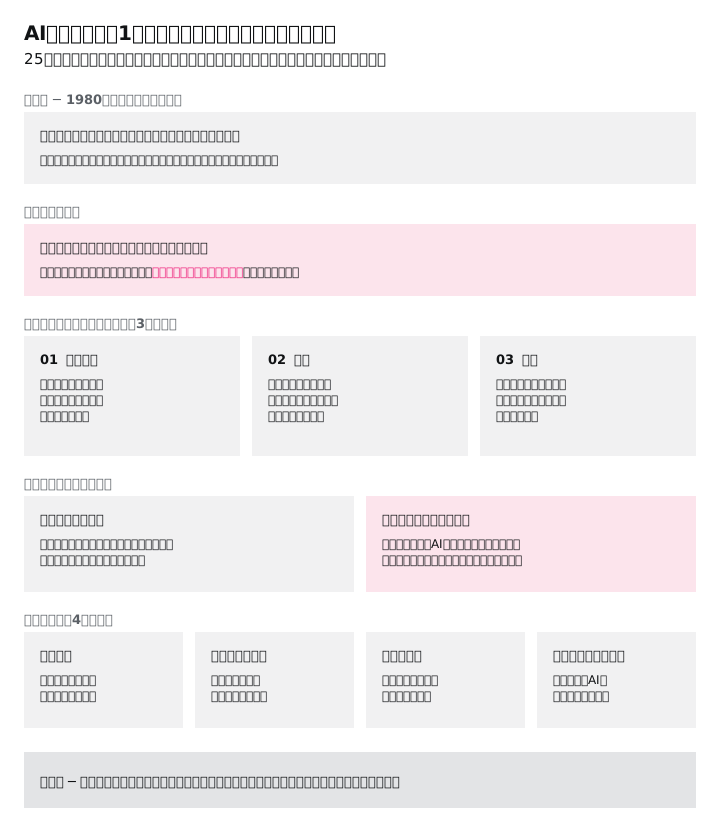
以下、原文の段落順に、英語原文(引用ブロック)とその日本語訳を並べる。訳は原文の構造と語順をできるだけ保った逐語寄りの訳で、意訳による圧縮はしていない。図解は原文にはなく、訳者が段落の構造を補足するために添えたものである。
タイトルと日付
Open Weights and American AI Leadership
July 24, 2026
オープンウェイトとアメリカのAIリーダーシップ
2026年7月24日
第1段落
In the 1980s, early open-source software pioneers challenged the prevailing belief that software would advance only if companies kept tight control over their code. This movement pushed for a transparent ecosystem where developers around the world could study, modify, and improve software. Software developed by the open-source community now supports most of the internet and underlies systems used by the world's largest technology companies, as well as the U.S. military and federal agencies conducting scientific research, cybersecurity, and other critical missions. Open source did more than lower the cost of software; it created a shared foundation of knowledge on which generations of American engineers and entrepreneurs built their institutional sovereignty.
1980年代、初期のオープンソースソフトウェアの先駆者たちは、「ソフトウェアが進歩するのは企業が自社のコードを厳格に管理下に置いた場合に限られる」という当時の支配的な信念に異議を唱えた。この運動は、世界中の開発者がソフトウェアを研究し、改変し、改良できる透明なエコシステムを推し進めた。オープンソースコミュニティが開発したソフトウェアは、今日ではインターネットの大部分を支え、世界最大級のテクノロジー企業が使うシステムの土台となっているだけでなく、科学研究・サイバーセキュリティその他の重要な任務を遂行する米軍および連邦政府機関が使うシステムの土台にもなっている。オープンソースがもたらしたのはソフトウェアのコスト低下だけではない。それは共有された知識の基盤を作り出し、その上に何世代ものアメリカのエンジニアと起業家が自らの組織的な主権を築いたのである。
第2段落
The United States now faces a similar choice with artificial intelligence. Our AI leadership will be judged not by one frontier AI model, but by whether the United States builds a strong, open ecosystem that diffuses into every sector. This is essential for creating opportunities for innovation and prosperity across the country. It requires expanding access to AI, encouraging competition, robust application layers, and giving Americans greater control over the technology they rely on. Open-weight models—AI models that anyone can download, inspect, modify, and run on their own infrastructure—are an important part of that foundation because they make advanced AI more accessible, adaptable, and widely available.
米国は今、人工知能について同様の選択に直面している。私たちのAIにおけるリーダーシップが評価される基準は、単一のフロンティアAIモデルではない。米国が、あらゆるセクターへ浸透していく強力でオープンなエコシステムを構築できるかどうかである。これは、イノベーションと繁栄の機会を国全体に生み出すうえで欠かせない。そのために必要なのは、AIへのアクセスの拡大、競争の促進、堅牢なアプリケーション層、そしてアメリカ人が依存するテクノロジーに対してより大きな制御権を彼らに与えることである。オープンウェイトモデル——誰でもダウンロードし、検査し、改変し、自分のインフラ上で実行できるAIモデル——は、その基盤の重要な一部をなす。なぜなら、それは高度なAIをより利用しやすく、適応させやすく、広く入手可能なものにするからである。
第3段落
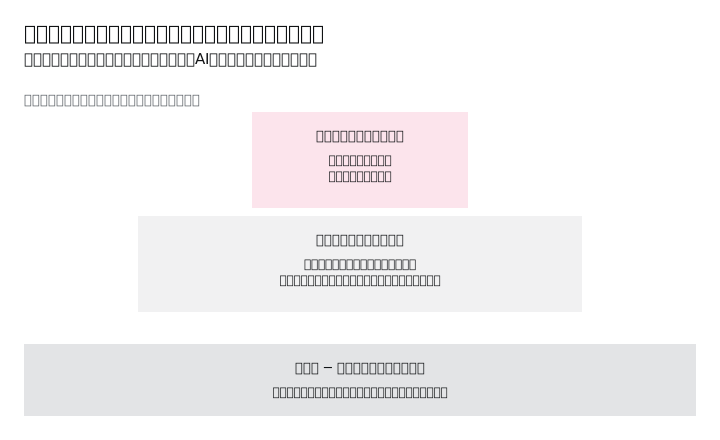
Open weights expand access to the AI economy. Startups, established businesses, universities, and public institutions can build on advanced models without training one from scratch or paying frontier-model prices for every task. Open weights let every organization match the right model to the right job at the right cost, reserving frontier-scale capability for genuine frontier problems and running efficient, specialized models everywhere else. That discipline is what will make AI economically sustainable as its use scales into the billions of everyday tasks. America wins the AI era by diffusing it into the workflows of factories, hospitals, farms, classrooms, and main street businesses.
オープンウェイトはAI経済へのアクセスを広げる。スタートアップ、既存企業、大学、公共機関は、モデルをゼロから訓練することも、あらゆるタスクにフロンティアモデルの価格を支払うこともなく、高度なモデルの上に構築できる。オープンウェイトによって、あらゆる組織が適切なモデルを適切な仕事に適切なコストで割り当てられるようになる。フロンティア規模の能力は真にフロンティアと呼べる問題のために取っておき、それ以外のあらゆる場所では効率的で特化したモデルを走らせる、というかたちだ。この規律こそが、AIの利用が日常の何十億ものタスクへと拡大していくなかで、AIを経済的に持続可能なものにする。アメリカがAIの時代に勝つのは、AIを工場・病院・農場・教室・地域の商店のワークフローへ浸透させることによってである。
第4段落
Open weights also strengthen competition and competition is what keeps the gains of AI broadly shared rather than concentrated in a few hands. By allowing many organizations to build, adapt, and deploy advanced models, open weights create rivalry not only among model developers but across cloud chips, applications, and services. That competition spurs innovation, drives down costs, and distributes the benefits of AI broadly across our economy.
オープンウェイトはまた競争を強める。そして競争こそが、AIの利益を少数の手に集中させるのではなく広く共有された状態に保つものである。多くの組織が高度なモデルを構築し、適応させ、展開できるようにすることで、オープンウェイトはモデル開発者どうしの間だけでなく、クラウドチップ、アプリケーション、サービスにまたがる競合関係を生み出す(注: 原文は across cloud chips, applications, and services で cloud と chips の間にカンマがない。「クラウド」と「チップ」を並列で挙げる意図の可能性もある)。その競争がイノベーションを促し、コストを押し下げ、AIの便益を私たちの経済全体へ広く行き渡らせる。
第5段落
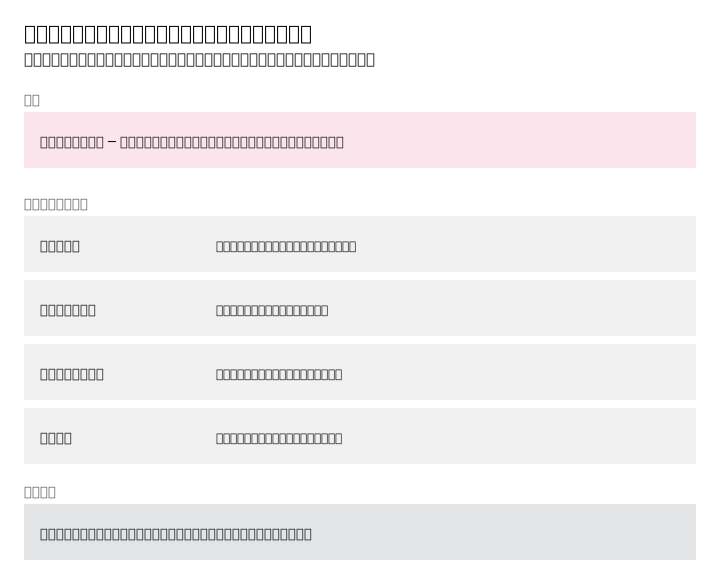
Open weights also give customers greater control. As organizations invest in AI, they want to know that they will not become locked into a single provider or lose the knowledge and capabilities they build over time. Open weight models help provide that assurance by allowing organizations to control their own data, evaluate and adapt models to their own needs, and deploy them wherever their business requirements demand. And as organizations create value with AI, open weights allow them to own that value through self-improving models, specialized capabilities, and accumulated knowledge that drive American sovereignty and prosperity.
オープンウェイトはまた、顧客により大きな制御権を与える。組織はAIに投資するにあたり、単一のプロバイダーに囲い込まれることも、時間をかけて築いた知識と能力を失うこともないと確認したいと考える。オープンウェイトモデルはその保証を与える助けとなる。組織が自らのデータを管理し、自らのニーズに合わせてモデルを評価・適応させ、事業要件が求める場所であればどこにでも展開できるようにするからだ。そして組織がAIによって価値を生み出すとき、オープンウェイトはその価値を自ら所有することを可能にする——自己改善するモデル、特化した能力、蓄積された知識を通じて。それらがアメリカの主権と繁栄を推し進める。
第6段落
To be sure, open weights carry real and distinct risks. Once released, the weights are beyond the original developer's control, and modified versions are difficult to trace or reverse. But the right response to this risk is not to prohibit open weights. In a world where cybersecurity attackers use advanced AI, defenders need access to models with comparable capabilities so they can detect, simulate, and respond to emerging threats. Open models broaden defensive capability, increase transparency, and allow vulnerabilities to be discovered and remediated across many teams.
たしかに、オープンウェイトは現実的で固有のリスクを伴う。いったん公開されれば、そのウェイトは元の開発者の制御を離れ、改変されたバージョンを追跡したり取り消したりすることは難しい。しかし、このリスクに対する正しい対応はオープンウェイトを禁止することではない。サイバーセキュリティの攻撃者が高度なAIを使う世界では、防御側は新たに現れる脅威を検知し、シミュレートし、対応するために、同等の能力を持つモデルへのアクセスを必要とする。オープンなモデルは防御能力の裾野を広げ、透明性を高め、多くのチームにまたがって脆弱性が発見され修復されることを可能にする。
第7段落
In fact, openness may be one of the most important paths to AI safety and security. Relying solely on closed models is not inherently safe: they can be breached, misused, or fail in ways that outsiders cannot detect. And concentrating advanced AI capabilities behind a small number of closed models compounds that risk. It results in a small number of single points of failure, weakens competition, and leaves critical technology in the hands of a few providers. Open weight models, on the other hand, allow a broad community of researchers and developers to examine their behavior, identify vulnerabilities, develop safeguards, and improve them over time. Just as open-source software demonstrated that transparency can be more secure than obscurity, AI safety may depend on giving more people the ability to test and strengthen the models on which society relies. It allows for rigorous benchmarking and evaluation, red teaming, and protections tied to real and demonstrated harms rather than assuming that closed systems are safer by default.
実のところ、オープンであることはAIの安全性とセキュリティに至る最も重要な経路のひとつでありうる。クローズドなモデルだけに依存することは、本質的に安全なわけではない。クローズドなモデルも侵害されうるし、悪用されうるし、外部の者には検知できないかたちで機能不全に陥りうる。そして高度なAIの能力を少数のクローズドなモデルの背後に集中させることは、そのリスクを増幅させる。その結果生じるのは、少数の単一障害点であり、競争の弱体化であり、重要な技術がごく少数のプロバイダーの手に委ねられる状態である。他方、オープンウェイトモデルは、研究者と開発者からなる広範なコミュニティが、その挙動を検証し、脆弱性を特定し、安全策を開発し、時間をかけて改良していくことを可能にする。オープンソースソフトウェアが「透明性は不透明さよりも安全でありうる」と示したのとちょうど同じように、AIの安全性は、社会が依存するモデルをテストし強化する能力をより多くの人々に与えられるかどうかにかかっているのかもしれない。それによって、厳格なベンチマークと評価、レッドチーミング、そして「クローズドなシステムはデフォルトでより安全だ」と決めてかかるのではなく現実に実証された害に結び付けられた保護措置が可能になる。
第8段落
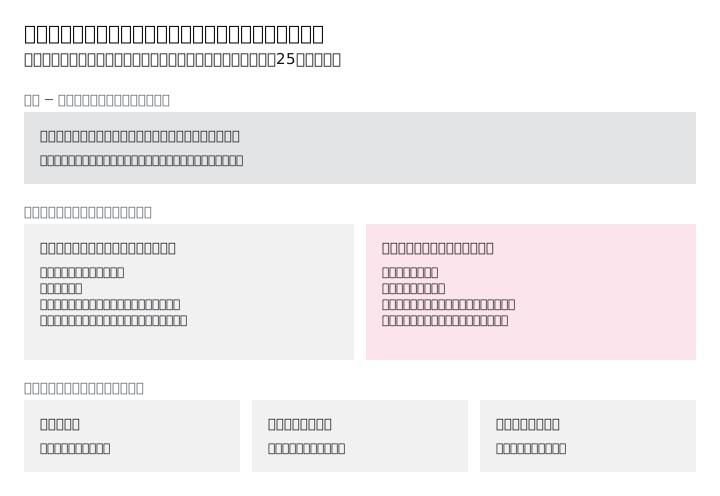
A strong AI ecosystem is not a foregone conclusion. Policymakers have an important opportunity to act. This includes expanding access to compute for startups and researchers, investing in shared training assets (datasets, tools, evaluation frameworks), and keeping the frontier plural by avoiding premature restrictions on open models that stifle competition or drive innovation overseas. These measures must also look at how strong application layers can expand sovereign use of AI across the economy.
強力なAIエコシステムは、あらかじめ決まっている結末ではない。政策立案者には行動する重要な機会がある。そこに含まれるのは、スタートアップと研究者に対する計算資源へのアクセスの拡大、共有される訓練資産(データセット、ツール、評価フレームワーク)への投資、そして、競争を窒息させたりイノベーションを海外へ追いやったりするようなオープンモデルへの時期尚早な規制を避けることでフロンティアを複数のまま保つことである。これらの措置はまた、強力なアプリケーション層がいかにして経済全体におけるAIの主権的な利用を拡大しうるかにも目を向けなければならない。
第9段落
In shaping this ecosystem, policymakers should be careful not to conflate legitimate model-development techniques with misappropriation. Distillation, or the practice of using one model's outputs to help train or improve another, is a widely used technique for model improvement, evaluation, and validation. It reflects a long tradition of learning from, building upon, and improving existing technologies, a tradition that has helped drive innovation since the rise of the open-source software movement. By contrast, unlawful efforts to extract value from closed models raise legitimate concerns. Those concerns should be addressed through targeted legal and commercial frameworks rather than sweeping restrictions on techniques that play an important role in AI innovation.
このエコシステムを形づくるにあたり、政策立案者は正当なモデル開発技法と不正な流用とを混同しないよう注意すべきである。蒸留(distillation)、すなわちあるモデルの出力を別のモデルの訓練や改良に役立てる手法は、モデルの改善・評価・検証のために広く使われている技法である。それは、既存の技術から学び、その上に築き、それを改良していくという長い伝統を反映しており、この伝統はオープンソースソフトウェア運動の興隆以来、イノベーションを推し進める力となってきた。これとは対照的に、クローズドなモデルから価値を抜き取ろうとする違法な試みは、正当な懸念を生じさせる。それらの懸念に対処すべき手段は、AIのイノベーションにおいて重要な役割を果たす技法への包括的な規制ではなく、対象を絞った法的・商業的な枠組みである。
第10段落
The age of AI can be one of prosperity. With the right choices, open weight AI can expand opportunity, strengthen competition, extend American technological leadership, mitigate risk, and ensure that the benefits of this extraordinary technology are shared broadly across our economy. That future is worth building, and the United States should lead in building it.
AIの時代は繁栄の時代となりうる。正しい選択をすれば、オープンウェイトのAIは機会を広げ、競争を強め、アメリカの技術的リーダーシップを伸ばし、リスクを緩和し、この並外れた技術の便益が私たちの経済全体で広く共有されることを確かなものにできる。その未来は築くに値するものであり、米国はそれを築くうえで先頭に立つべきである。
署名団体
American Innovators Network • Andreessen Horowitz • Arcee AI • Arena • Black Forest Labs • Box • CrowdStrike • Dell Technologies • Emergence Capital • Hugging Face • IBM • The Linux Foundation • Mariana Minerals • Meta • Microsoft • Mistral • Mozilla • NVIDIA • Palantir • Perplexity • Reflection • Replit • ServiceNow • Telnyx • Y Combinator
American Innovators Network、Andreessen Horowitz、Arcee AI、Arena、Black Forest Labs、Box、CrowdStrike、Dell Technologies、Emergence Capital、Hugging Face、IBM、The Linux Foundation、Mariana Minerals、Meta、Microsoft、Mistral、Mozilla、NVIDIA、Palantir、Perplexity、Reflection、Replit、ServiceNow、Telnyx、Y Combinator(計25団体)
訳語について
原文の主要な用語は、以下のように訳し分けた。
| 原語 | 訳語 | 補足 |
|---|---|---|
| open weights / open-weight models | オープンウェイト/オープンウェイトモデル | ウェイト(重み)が公開され、ダウンロード・検査・改変・自前実行ができるモデル |
| openness | オープンであること | 第7段落。オープンソース運動の文脈でいう「開かれた状態」。下の release(公開する)と混ざらないよう、カタカナのままにした |
| release | 公開する | 第6段落。ウェイトを世に出す動作。本記事で「公開」と書いてあるのはすべてこちらの意味 |
| frontier model | フロンティアモデル | その時点で最先端の大規模モデル |
| institutional sovereignty | 組織的な主権 | 第1段落。自らの技術基盤を自ら制御できる状態を指す |
| sovereign use of AI | AIの主権的な利用 | 第8段落。国・組織が自らの管理下でAIを使うこと |
| distillation | 蒸留 | あるモデルの出力を使って別のモデルを訓練・改良する手法 |
| red teaming | レッドチーミング | 攻撃者の視点でモデルの弱点を突く検証 |
| single points of failure | 単一障害点 | そこが落ちると全体が止まる箇所 |
| obscurity | 不透明さ | 「security through obscurity(隠すことによる安全)」を踏まえた対比表現 |
出典
→ Open Weights and American AI Leadership(PDF, NVIDIA, 2026年7月24日)
引用した英語原文の著作権は署名各団体に帰属する。本記事は原文の全文を対訳の形で紹介するものであり、日本語訳は当サイトによる私訳である。訳文と原文に齟齬がある場合は原文が優先される。