CEO は「メモリ供給が追いつく時期は見えない」と明言。背景は構造的: ① グリーンフィールド fab 建設の長期化、② HBM の trade ratio 拡大が non-HBM 供給を圧迫、③ NAND→DRAM への cleanroom 振り替えが NAND ビット成長を制約。
“With respect to supply, our customers are recognizing that supply shortages in memory and storage will take considerable time to improve. Even as we expect industry supply to improve gradually in 2028, we currently do not have line of sight as to when memory supply will be able to catch up with increasing demand.”
“Memory industry supply growth is dependent on significant greenfield fab expansions. These greenfield projects are large, complex and time consuming. Further, the pace is constrained by several factors, including long lead time for fab construction across the world, shortage of workers with critical trade skills, complex regulations including permitting, and the need for enhanced energy infrastructure.”
— Sanjay Mehrotra (CEO) / Industry trends
“Technology transitions are driving slower bit growth over time, wafer growth needs are significantly increasing cleanroom space and greenfield fab requirements, and HBM’s growth and increasing trade ratio with every new generation further pressures non-HBM supply. In NAND, industry suppliers redirecting cleanroom space from NAND to DRAM and overall limited cleanroom space constrain NAND bit supply growth.”
— Sanjay Mehrotra (CEO) / Industry trends
“We now expect supply-demand conditions for both DRAM and NAND to remain tight beyond calendar 2027.”
— Sanjay Mehrotra (CEO) / Market outlook
“In fiscal Q4, we project capex of around $10 billion, bringing full-year fiscal 2026 capital spending to approximately $27 billion. We expect quarterly capex in fiscal 2027 to be above fiscal Q4 levels, with more than half the increase year over year in fiscal 2027 from construction capex as we pull in cleanroom capacity required to address long-term demand.”
データセンター — 2026 サーバー台数成長を「high-teens」へ上方修正、エージェント AI で 3 点セット需要
エージェント AI が DC アーキテクチャを再編。アクセラレータラック単独ではなく、エージェント制御プレーン用の CPU ラック、急拡大するコンテキストストア用ストレージラックが追加で必要に。供給逼迫により、メーカーは サーバー1台あたり DRAM 容量増加を絞ってでも台数を出している。
“Agentic AI is structurally reshaping data center infrastructure, extending beyond accelerator-only racks to include CPU racks for the agent control plane and program execution, and storage racks for rapidly expanding context store.”
— Sanjay Mehrotra (CEO) / End markets — Data center
“We now expect calendar 2026 industry server units to grow high-teens percent, above our prior expectations of low double digits, driven by mid-teens growth in traditional servers and even stronger growth in servers with AI accelerators. We estimate that this increase in our server unit growth expectation is enabled by a modest reduction in average server DRAM content growth as customers focus on maximizing unit shipments amid a very tight allocation of memory.”
— Sanjay Mehrotra (CEO) / End markets — Data center
→ ポイント: AI アクセラレータサーバーだけでなく 従来型サーバーも mid-teens で伸びる。Q3 の data center 売上は $25B 超(年率換算 $100B 超)、data center SSD だけで $5B 超で前Q比倍増。メモリ割当が逼迫しているからこそ「台数優先で DRAM 容量増を抑える」という顧客行動が起きており、これがメモリ不足の深さの傍証になっている。
03
PC / スマホ — 台数減でも業界売上は成長、エージェント AI(OpenClaw / NemoClaw)が ASP を押し上げ
オンデバイス AI が高性能機の単価を引き上げ、ASP ミックス改善で業界売上を維持。OpenClaw / NemoClaw はエッジ側でエージェントを動かす基盤の固有名(公式原文)。Tokenomics(トークン効率)、プライバシー、レイテンシ、クラウド/エッジ間オーケストレーションがハイエンド機需要を促す。
“PC and smartphone industry revenue is expected to grow despite unit volume declines, reflecting resilient demand for high-end devices at higher prices across end-device categories. Agentic AI platforms such as OpenClaw and NemoClaw elevate the value of edge devices, enabling improved tokenomics, greater privacy and latency, and more efficient orchestration of AI between the cloud and edge. Over time, we expect the value of on-device AI combined with pent-up unit replacement demand to drive memory demand growth in PCs and smartphones.”
— Sanjay Mehrotra (CEO) / End markets — PC and mobile
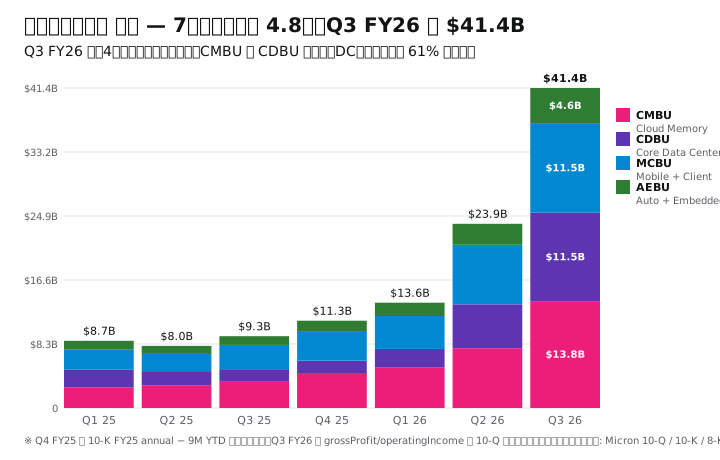
→ ポイント: 数量は減るのに業界売上は成長する、というメッセージ。Mobile and Client Business Unit(MCBU)の Q3 売上は $11.5B(前Q比 +49%)、粗利率 87%。エッジ AI が高性能機への買い替えを促し、潜在的な交換需要(pent-up replacement demand)と重なって需要を押し上げる構造。
04
自動車 — ADAS が content growth を牽引、L2+ は平均車の 5 倍超メモリ
自動車市場は「動く AI サーバー」へ。L2+ 以上は ADAS センサーフュージョンと NN 推論で平均車比 5 倍超のメモリ/ストレージを搭載。L2+ 比率は今年で倍増して 20% 超、2030 年には 40% 超に。
“In automotive, ADAS (advanced driver-assistance systems) remains a powerful driver of content growth. L2+ and above vehicles, which feature progressively increasing levels of autonomy, have over five times the memory and storage content of an average vehicle. The mix of L2+ and above vehicles is more than doubling this year to over 20% and expected to exceed 40% by 2030. Average auto memory and storage content is expected to further increase as mix shifts towards higher levels of autonomy with progressively higher levels of content.”
— Sanjay Mehrotra (CEO) / End markets — Automotive and robotics
ロボティクス — Physical AI 到来、ヒューマノイドは L2+ AV の 10 倍メモリ、数十年の需要サイクル
シミュレーション、ファウンデーションモデル、ハード/ソフト統合スタックの進展が Physical AI を加速。リアルタイム認識・推論・制御のために高帯域幅・低消費電力メモリが大量に必要になる。
“In robotics, continued advances in simulation, foundation models, and integrated hardware and software stacks are accelerating physical AI. This creates a growing, content-rich opportunity for high-bandwidth, low-power memory and storage that powers real-time perception, inference and control. Humanoid robots carry 10 times the amount of memory as an average L2+ vehicle, and we expect a sustained, substantial multi-decade memory demand cycle to begin in the latter part of this decade.”
— Sanjay Mehrotra (CEO) / End markets — Automotive and robotics
→ ポイント: ヒューマノイドは L2+ 自動車の 「10 times」のメモリ = 平均車の約 50 倍超。CEO は「2020 年代後半から数十年規模の強力な需要サイクル(sustained, substantial multi-decade memory demand cycle to begin in the latter part of this decade)」と明言。
“For SCAs with defined price, either fixed or subject to floor and ceiling pricing, in accordance with the revenue accounting standard, we are disclosing remaining performance obligations (RPO) starting this May quarter. RPO at the end of fiscal Q3 (FQ3) was over $5 billion. For the SCAs that we have entered into so far, including ones executed after the end of FQ3, RPO is approximately $100 billion. RPO is determined based on minimum committed volumes and minimum pricing, and reflects inherently conservative estimates. RPO is not indicative of the total revenue we expect to recognize in future periods. As such, we expect revenue to well exceed associated RPOs over the term of the agreements.”
— Mark Murphy (CFO) / Strategic customer agreements
“As Sanjay mentioned, we project to receive cash deposits and related financial commitments of $22 billion under the SCAs we have signed so far. The overwhelming majority of these commitments, approximately $18 billion, will be in the form of cash deposits. When all targeted SCAs are completed, we expect to have substantially higher levels of SCA customer deposits and related commitments.”
— Mark Murphy (CFO) / Strategic customer agreements
“These customer deposits will show up on our balance sheet more in FQ4. The cash flows associated with customer deposits appear in financing-related cash flows and will not affect our free cash flow. This cash will be returned to customers over time, towards the latter half of the agreement term.”
— Mark Murphy (CFO) / Strategic customer agreements
→ 重要な訂正: 前バージョンで $22B を「実際にキャッシュで受領」と書いていたが、CFO 発言で正確には $22B = 現金預金 $18B + 関連金融コミット $4B。さらに「This cash will be returned to customers over time, towards the latter half of the agreement term」とあり、デポジットは契約期間後半に返却される(永久的な受領ではない)。会計上は financing-related CF に区分されるので FCF・配当原資には影響しない。
“The most underappreciated data point on MU’s earnings call was that the number of five-year SCAs increased from one last quarter to seven this quarter. That’s significant because it suggests customers expect this buildout to last for at least five years and want greater pricing visibility over that time frame.”
ファクトのクロスチェック: 公式 Prepared Remarks には「16件」しか直接記載がないが、内訳を分解すると「Typically these agreements have a five-year term. Automotive agreements generally have a three-year term. The 16 signed agreements ... four very large customers and three medium-sized customers. The remaining agreements relate to smaller customers from the automotive industry」(CEO)。つまり 5年契約 = 4 + 3 = 7 件、3年契約 = 16 − 7 = 9 件。Munster の数字と算術が完全一致する。「1件 → 7件」の「前Q 1件」部分は Q&A セッションで CEO が口頭で言及したと推測される(Munster が動画クリップを添付しているため)。
1分まとめ